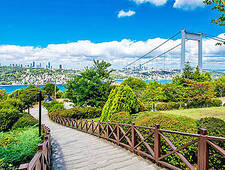
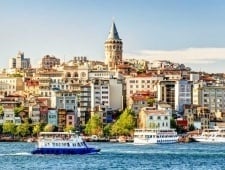
As Istanbul is one of the most visited cities in the world, it hosts millions of local and international visitors every year. While many new residents move to the city for work, education, and lifestyle opportunities, some visitors are drawn by its rich history, cultural heritage, and natural beauty. This raises two common questions: “Is Istanbul a walkable city?” and “Is it safe to walk around in Istanbul?”. The answer to both questions is generally positive.
Due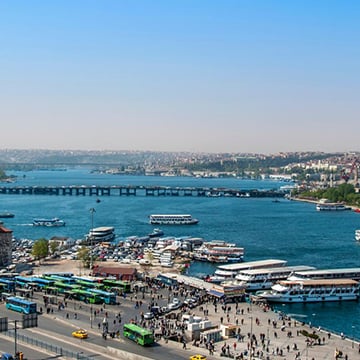 to its large population and constant movement, Istanbul is often associated with traffic congestion, bridges, and long commutes. However, this image does not fully reflect how daily life functions at the neighborhood level. There are many pedestrian zones in Istanbul designed for walking rather than driving. Neighborhoods such as Galata, Cihangir, Moda, Nişantaşı, Karaköy, and Balat are often among the first places that come to mind when discussing where to walk in Istanbul. These Istanbul neighborhoods with cafes, shops, and parks offer a compact urban layout where daily needs can be met within walking distance. As a result, you can comfortably manage your daily routines when you are living in Istanbul without a car.
Therefore, it is possible to say that walking around in Istanbul is easy in many areas. Further, Istanbul’s public transportation network, together with its historic urban planning and neighborhood structure, strongly supports this pedestrian movement. Consequently, car-free living in Istanbul becomes not only possible but also practical in many ways. And in this article, as Istanbul Homes ® professionals, we will see the most walkable neighborhoods in Istanbul.
The Best Walkable Areas in Istanbul
Walking in Istanbul can feel very different depending on the district, as some areas are designed around compact streets, mixed-use development, and strong public transportation connections. In these neighborhoods, daily life is organized within short walking distances, making private car ownership unnecessary for many residents. Below, you can find some of the most walkable areas for daily errands in Istanbul.
The Historic Peninsula: Sultanahmet Square, Hagia Sophia & Gülhane Park
Located in the European Side of Istanbul, Fatih is a central district. It covers the walled Historic Peninsula, which can be regarded as the heart of the city. The Historic Peninsula’s walkability for residents is supported by its compact street structure and the close proximity of daily services. For instance, located within the Historic Peninsula, Sultanahmet is a walkable neighborhood. As walking is seen as the most practical way to move within Sultanahmet, you can easily visit Hagia Sophia, Topkapı Palace, the Basilica Cistern, the Turkish and Islamic Arts Museum, and Cağaloğlu. It is also one of the best public transport neighborhoods in Istanbul. So, when you get tired, you can use the tram, which runs directly through the neighborhood and connects it to Kabataş, Eminönü, and Bağcılar. These connections allow you to reach other parts of the city easily without a car.
On the other hand Gülhane Park, which is located nearby, is one of the best parks in Istanbul to connect with nature. There are shaded paths, open spaces, and direct pedestrian connections to surrounding neighborhoods in this park. This means that you can use the park for daily walks, relaxation, and family activities. That is why it is seen as one of the best places to walk in Istanbul. It also benefits from nearby tram stations and ferry access through Eminönü and Sirkeci so it supports a pedestrian lifestyle combined with public transport.
Fatih also stands out as one of the walkable areas near the metro in Istanbul. Metro stations such as Vezneciler and Aksaray, along with tram and bus lines, provide strong connections to other districts. Thus, we can say that you rarely need to depend on private vehicles here.
Beyoğlu: Galata Tower, Istiklal Avenue & Karaköy
Beyoğlu sits north of the Golden Horn, separated from Istanbul's historic peninsula by waterway. Situated in Beyoğlu, Galata is mostly defined by its narrow streets, historic buildings, and an active cultural scene. Within a short stroll, you can see landmarks such as the Galata Tower, wander along atmospheric stre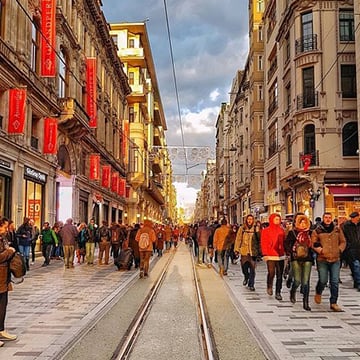 ets like Serdar-ı Ekrem and Büyük Hendek lined with cafés, boutiques, and galleries. This highlights the strong walkability in Beyoğlu and Galata.
Galata’s car-free lifestyle can also be clearly experienced when walking downhill toward Karaköy. Along the way, you encounter the Kamondo Stairs, historic buildings, and lively waterfront areas. Meanwhile, Şişhane Metro Station connects Galata directly to Mecidiyeköy and Yenikapı, while the Karaköy ferry terminal offers easy access to the Asian Side. Thanks to these ferry connections, you can easily reach the other Asian Side walkable neighborhoods in Istanbul.
On the other hand, one of Beyoğlu’s walkable neighborhoods is the area surrounding Istiklal Avenue, which represents one of Istanbul’s most pedestrian-oriented zones. The avenue itself is closed to private traffic, and a historic tram operates along its length. Here you can see many shops, cinemas, bookstores, supermarkets, and cafés lining the street. In addition to its commercial life, Istiklal Avenue offers numerous cultural and historical attractions. You can see landmarks such as Galatasaray High School, St. Anthony of Padua Church, Cité de Péra, and several historic apartment buildings from the late Ottoman and early Republican periods.
Kadıköy: The Bull Statue, Bahariye Street & Moda
Kadıköy is also widely regarded as one of the pedestrian-friendly districts with metro access in Istanbul. Here, fish markets, bakeries, bookstores, pharmacies, and cafés are located close to one another, keeping walking distances short and practical for daily life. As the district is home to a mainly young population, it offers many affordable walkable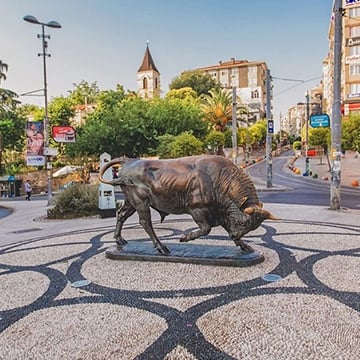 neighborhoods in Istanbul. When compared to more central and tourist-oriented neighborhoods in Beşiktaş, neighborhoods like Rasimpaşa and Hasanpaşa in Kadıköy stand out as budget-friendly pedestrian areas in Istanbul.
One of the most well-known landmarks in Kadıköy is the Bull Statue, which is a popular meeting point for locals and visitors. It is located near Altıyol, where several main pedestrian streets come together and lead toward Bahariye Street. From this central point, shops, cafés, public transport, and cultural spots are all within easy walking distance, showing that living in Kadıköy without a car is simple and convenient for everyday life.
Further along the coastline lies Moda, one of Kadıköy’s most livable and walkable neighborhoods. Known for its seaside paths, historic apartments, and relaxed café culture, Moda allows you to meet most daily needs within a short walking distance. Its green spaces, coastal walking routes, and access to ferry services create a calm lifestyle while still remaining closely connected to the rest of the district. It is also seen as a popular pedestrian-friendly neighborhood near schools in Istanbul. All of these features make Moda one of the best areas to live in Istanbul with kids.
Şişli: Kurtuluş, Bomonti & Nişantaşı
Located in the central part of Istanbul’s European Side, Şişli is one of the districts where urban life is organized around short distances and strong public transportation links. Among its neighborhoods, Kurtuluş, Bomonti, and Nişantaşı stand out as strong examples of a car-free lifestyle in Istanbul’s city center.
Kurtuluş is especially known for its dense residential fabric, lively street life, and multicultural atmosphere. The main streets, including Kurtuluş Avenue, function as local commercial spines where residents can handle most errands without relying on a car. This compact structure supports a strong sense of neighborhood life and makes Kurtuluş one of the family-friendly walkable neighborhoods in Istanbul. In addition to its walkability, it benefits from excellent public transportation access, making Kurtuluş a pedestrian-friendly area. Osmanbey and Kurtuluş metro stations are within walking distance, providing direct connections to Mecidiyeköy, Taksim, and Yenikapı. Bus routes also pass through the area, further reducing the need for private vehicles.
Nearby Bomonti offers a slightly different but equally pedestrian-oriented experience. Once an industrial zone, it has transformed into a mixed-use neighborhood with residential buildings, offices and cultural venues. Therefore, with their compact layout and lively atmosphere, Kurtuluş and Bomonti for urban explorers represent an attractive choice to discover the city on foot.
Completing the picture, Nişantaşı’s upscale walkable lifestyle highlights how daily needs, social life, and green spaces can coexist within a compact urban setting. Streets such as Abdi İpekçi, Teşvikiye, and Rumeli are lined with boutiques, cafes, supermarkets, schools, and healthcare facilities, all within walking distance. The neighborhood’s compact blocks and high-quality sidewalks encourage walking as part of daily life, while multiple nearby metro stations and easy access to Maçka Democracy Park further support a pedestrian-oriented lifestyle.
Beşiktaş: Levent, Ortaköy & Beşiktaş Square
Beşiktaş is also one of Istanbul’s districts with parks and schools. Known for its energetic street life, universities, and cultural hotspots, Beşiktaş offer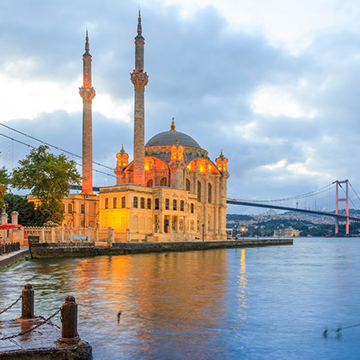 s a compact urban structure where walking is often the easiest way to get around. At the heart of the district lies Beşiktaş Square, a bustling hub connecting ferry docks, bus routes, and nearby neighborhoods. From here, you can easily walk to cafes, markets, and social venues. You can also catch a ferry to Kadıköy and Üsküdar. So, we can say that this district has many walkable Istanbul neighborhoods near ferry terminals.
Located in Beşiktaş, Levent offers a different but equally walkable experience. It is a business and shopping area which has many modern malls and office complexes. Meanwhile, Ortaköy combines historic charm with a lively pedestrian environment. Famous for its waterfront, cafes, and Sunday market, Ortaköy is ideal for leisurely walks, seaside strolls, and social gatherings. Overall, Beşiktaş’s central living and public transport options make it a very walkable district.
Practical Tips for a Car-Free Experience in Istanbul
Living without a car in Istanbul depends largely on neighborhood choice but we have prepared some tips to make your car-free journey easier:
- Use public transportation to move around the city.
- Plan your walking routes to avoid crowded streets.
- Combine walking with ferries for faster travel.
- Use online delivery services for groceries.
- Avoid peak hours to enjoy quieter streets.
- Stay safe by watching the traffic.
By following these simple tips, you can enjoy the city fully on foot while living a practical car-free lifestyle. If you need further information, you can also read our blog on real-life tips for expats living in Istanbul.
Frequently Asked Questions about Car-Free Living in Istanbul
Is Istanbul pedestrian-friendly?Yes, Istanbul is pedestrian-friendly, particularly in historic and central neighborhoods. Streets in Sultanahmet, Moda, and Nişantaşı are compact and well-connected, with easy access to public transport.
Is Istanbul safe to walk around?Yes, most neighborhoods in Istanbul are safe to explore on foot but you should, of course, follow standard precautions such as watching the traffic and keeping your belongings secure, especially when you are walking from Sultanahmet to Laleli.
Which Istanbul neighborhoods are the most walkable?Cihangir, Moda, Balat and Kurtuluş are among the most walkable neighborhoods in Istanbul.
Can you live in Istanbul without a car?Yes, living in Istanbul without a car is very possible, especially in neighborhoods designed around walkability and public transport.
What is the cost of living in walkable Istanbul neighborhoods?The cost of living varies by district. Central areas like Nişantaşı, Beşiktaş, and Sultanahmet tend to be higher due to their prime locations, cultural attractions, and amenities. More budget-friendly yet walkable neighborhoods include Rasimpaşa and Hasanpaşa.